Over the past week, there were a few indicators that raised concern. They show that fuel price shocks have consequences.
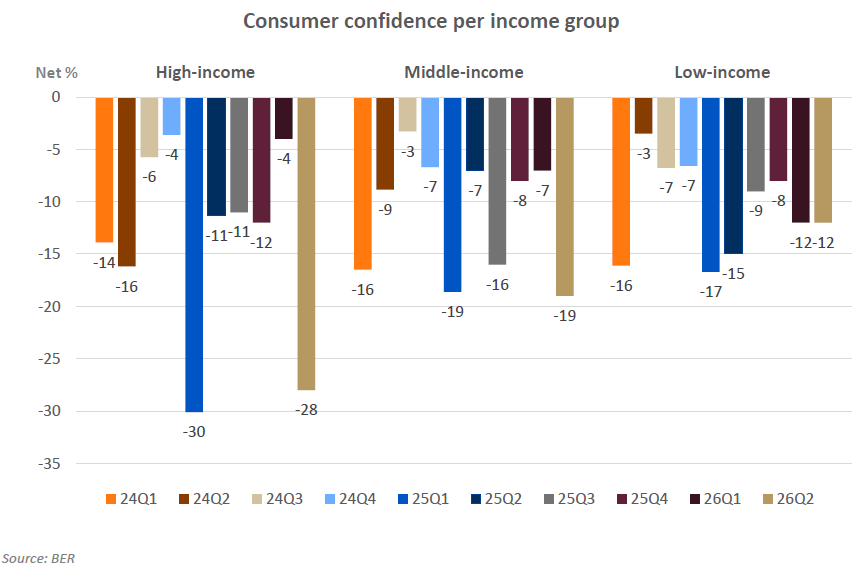
The FNB and Bureau’s consumer confidence index declined sharply in the second quarter. The fuel price increases in April and May are estimated to have caused approximately R45 billion in additional costs throughout the economy, placing household and business budgets under pressure. The confidence of high- and middle-income households has been dampened by the repo rate increase. Everyone is concerned about the economic outlook, and far fewer households believe that now is a good time to purchase durable goods.
That pressure is also visible in PayInc’s salary index. Average real net salaries are at their lowest point in two years. When the economy grows slowly, salary increases are small and higher inflation erodes the purchasing power of that income.
When consumers come under strain, it quickly flows through to other economic activity. The Reserve Bank’s leading indicator declined in April, with 8 of the 10 indicators weakening.
The question is whether inflation can decrease as quickly as it increased, and when the Reserve Bank will again be able to lower the repo rate. On the consumer price inflation side, the May figures did not suggest much second-round pressure on prices yet, but the PPI figure is cause for concern. Producer price inflation rose from 4.8% in April to 7.8% in May. The largest increases were in the petroleum, chemical, rubber and plastic products category — which is most affected by the oil price — but the factory gate prices of food products, paper and printing, and machinery prices also rose. So, even with the declining oil price, there is still some price pressure on the way.